Standing by
They say there’s no such thing as a free lunch. The tradeoff for my being able to fly for almost nothing on United this year is that I fly standby, which means I get a seat only after all the people who want to pay for a ticket on that flight (revenue passengers) have gotten theirs. The procedure works like this: I book a flight and pay the tax (based on distance and cabin) then I’m put into a queue (pdf link) based on the seniority of the person who gave me the pass (my brother). I turn up for the flight at the same time as everyone else, go through security, and wait. I’m allocated a seat as soon as possible, which tends to be either just before boarding or just before the plane leaves. Simples.
Of the 30-odd flights on my itinerary, I was only denied a seat on four of them, though the first missed flight tended to create a cascade of missed flights that I’m not going to count. There was usually some kind of extraordinary circumstance that caused me to not make a flight: weather issues at a hub, popular vacation days, or drones shutting down the airport for a few hours, forcing the airlines to scramble to get people onto planes when the dust settled. Despite many flights being overbooked it was rare for a flight to not take any standby passengers at all. In a group of a couple hundred people, someone is going to oversleep, get stuck in traffic, change their plans, or whatever. I started to appreciate that a lot of a gate agent’s work seems to be in managing the space created by this uncertainty.
I’d flown standby as a non-rev before and made some spectacular mistakes (the biggest being choosing to fly at Thanksgiving, the biggest travel holiday of the year for the US), but I didn’t have extensive experience. Some stuff I knew (pick flights, routes, and days that aren’t popular). Some stuff I picked up randomly (no, you may not take the jumpseat, you have to be a flight attendant or a pilot, so you just have to hope someone ahead of you in the queue takes it). Some things I had to learn by repeatedly bashing my head against the situation. The two most important of those were: the gate agent can sometimes work magic for you, and don’t ever give up.
Gate agent magic isn’t always possible, but sometimes it can make the difference. When the reality of an overstuffed IAD-SAV flight started to dawn as I poked at my phone one morning, I appealed to the man at the podium. “I’m flying for my mother’s birthday,” I said calmly and truthfully. “If I don’t make it, she’s going to be alone.” I have no idea what was reshuffled to make that work, but I was the last standby to scurry onto that plane. Both my mother and I were deeply grateful. I IAH I sometimes engineered space in queues for three flights at a time when things started to go bad, and juggling those would have been a lot trickier if the gate agents weren’t so willing to work with me.
The most important thing I learned, through repeated evidence presented over many flights, was not to give up. If the US has a culture of standby flying it is probably linked to the complimentary culture of ludicrous optimism. The game does not end until the plane taxis away from the gate, no matter how bleak the situation looks. Sometimes people come off a plane and you can take their seat. (Ghoulish, I know, but certain things matter a lot less when you’re essentially hitchhiking.) Early morning domestic flights are fantastic for standby miracles because people oversleep; a full flight can suddenly open up just enough for you and your battered carryon to squeeze on. You don’t tend to find this out until the last possible moment, however, for obvious reasons. When I fled Pittsburgh, it was with the words “Go go go, before anyone else turns up!” ringing in my ears as I sprinted down the jetway.
I picked up some other bits and pieces along the way.
- If a flight looks full a week ahead of time, your chances are not great. If the flight looks wide open a week ahead of time, that can change a lot in just a few hours. Don’t let anyone think anything is set in stone until the plane taxis away from the gate.
- The time between flights is often not long enough to leave the airport or otherwise decompress, so if you’re caught in a cascade of missed flights it doesn’t mean you can pop out and see your mates. The realities of airport transit and security queues means that if you’re in, you kind of need to stay in. Unless you’re willing to give up a chance at a flight.
- If there’s a mobile app for your airline, use it. The reservation for non-revs works the same as for revenue passengers, so you can see your mobile boarding pass and boarding totals and seat map just like anyone else. I often saw my seat assignment in the app before the gate agent distributed boarding cards.
- Learn where your airline’s hubs are and look for patterns in the boarding totals. I would not have made it to Calgary had I tried to fly through ORD or DEN or kept trying SFO. IAH was my best bet for a lot of trips, even though it often didn’t make sense geographically.
- Non-revs have a dress code. No jeans, hoodies, bare midriffs, visible underwear, pajamas, skanky skirts, etc. As a result I spent most of the month in dresses and full makeup, which really changes one’s airport experience.
- Do not forego sleep. Even if it seems like a good idea at the time, even if the only option is a mere 3-4 hours curled up between a pillar and a window.
A month of flying served as a good stress test for the system, and it’s easy to conclude “That’s well and good if you have the time, but I don’t.” If you can work around a day of uncertainty on either end of your trip you can fit it into normal travel plans too. Airline employees do this all the time. By the end of the month I’d developed a certain falm fatalism about the entire process, to the point where my complete failure to make it to Florida was taken in stride and replaced with a perfectly pleasant two nights in San Francisco.
I’d do it again, definitely.
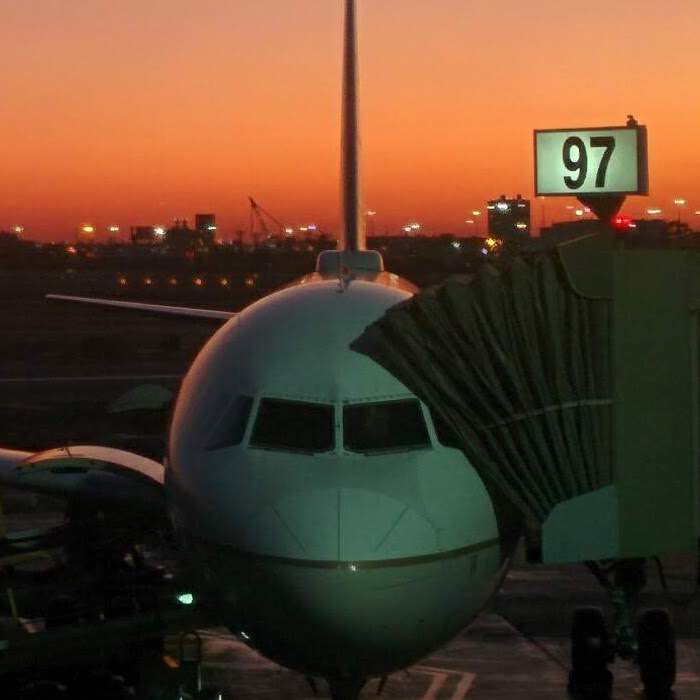
The standby culture is something I will now be adopting with my own travel. An initial, albeit ultimately unsuccessful, experiment makes me think it’s well worth it. I had a long layover on my final flight back through FRA, but since the first leg was early I had a marginal chance of hitting the earlier Dublin flight. I tried, but it was full. Still, it seems extremely doable.
No matter how long it seems from the outside, I a not convinced that layovers are realistic jump-offs. As you say, security takes time, but then you’ve got to escape the airport and get into the place, orient yourself, and then do the whole reverse. I think time spent trying to get a better flight, or some rest, is better. I don’t find that I dislike sitting near the gate with a drink and my electronics. I do much prefer it with free wifi though.
The phrase “All Captains Deadhead on all metal” fascinates me. I would love to know what it means.